Camel Milk as an Emerging Functional Dairy from an Animal Source: A Comprehensive Review
Akanksha
Centre of Food Technology, Institute of Professional Studies, University of Allahabad, Prayagraj, Uttar Pradesh-211 002, India.
Vishal Kumar *
College of Post-Harvest Technology and Food Processing, Sardar Vallabhbhai Patel University of Agriculture and Technology, Meerut, Uttar Pradesh- 250 110, India.
Durga Shankar Bunkar
Department of Dairy Science and Food Technology, Institute of Agricultural Sciences, Banaras Hindu University, Varanasi, Uttar Pradesh- 221 005, India.
S. K. Goyal
Department of Agricultural Engineering, Institute of Agricultural Sciences, Banaras Hindu University, Varanasi, Uttar Pradesh- 221 005, India.
Anu Kumari
College of Post-Harvest Technology and Food Processing, Sardar Vallabhbhai Patel University of Agriculture and Technology, Meerut, Uttar Pradesh- 250 110, India.
Nimisha Tehri
College of Post-Harvest Technology and Food Processing, Sardar Vallabhbhai Patel University of Agriculture and Technology, Meerut, Uttar Pradesh- 250 110, India.
*Author to whom correspondence should be addressed.
Abstract
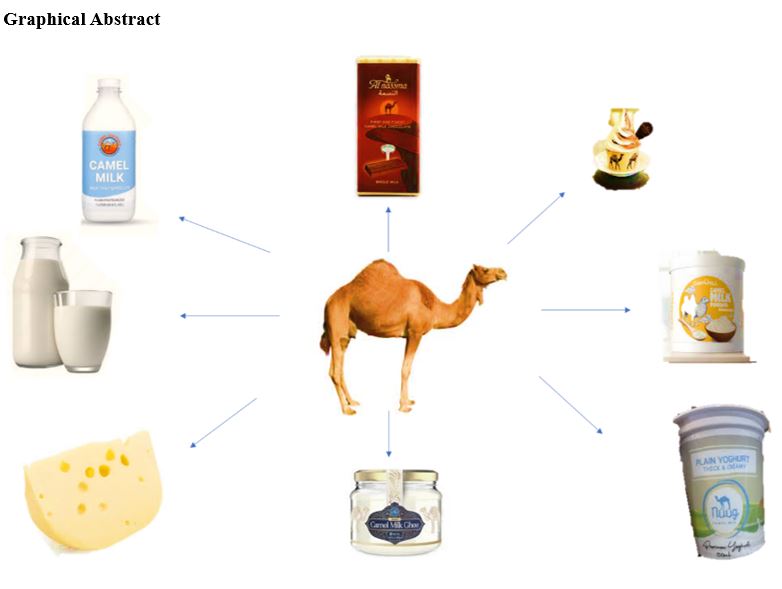
Camel milk has gained substantial interest as a functional food, primarily due to its unique nutritional composition and therapeutic properties, including antidiabetic, antimicrobial, and hypoallergenic effects. This study provides a comprehensive overview of the chemical composition, health benefits, and processing challenges associated with camel milk. Compared to bovine milk, camel milk is characterised by higher levels of bioactive compounds such as insulin-like proteins, vitamin C, and long-chain unsaturated fatty acids, alongside a distinctive protein profile lacking β-lactoglobulin and exhibiting larger casein micelles. Despite its therapeutic potential and growing global market demand, the industrial-scale production of camel milk products remains constrained by technological limitations such as poor rennet coagulation, inefficient creaming, high microbial load, and heat sensitivity of bioactive components. Recent advances in processing strategies—including the use of recombinant camel chymosin, non-thermal preservation techniques, ultrafiltration, and tailored starter cultures—have demonstrated promise in improving product yield, stability, and quality. Establishing adaptive process control systems, improving hygienic practices, and implementing standardised regulatory frameworks are critical steps toward expanding the commercial utilisation of camel milk as a sustainable and functional dairy alternative.
Keywords: Camel milk, functional food, bioactive compounds, processing challenges, dairy technology, recombinant chymosin, non-thermal preservation